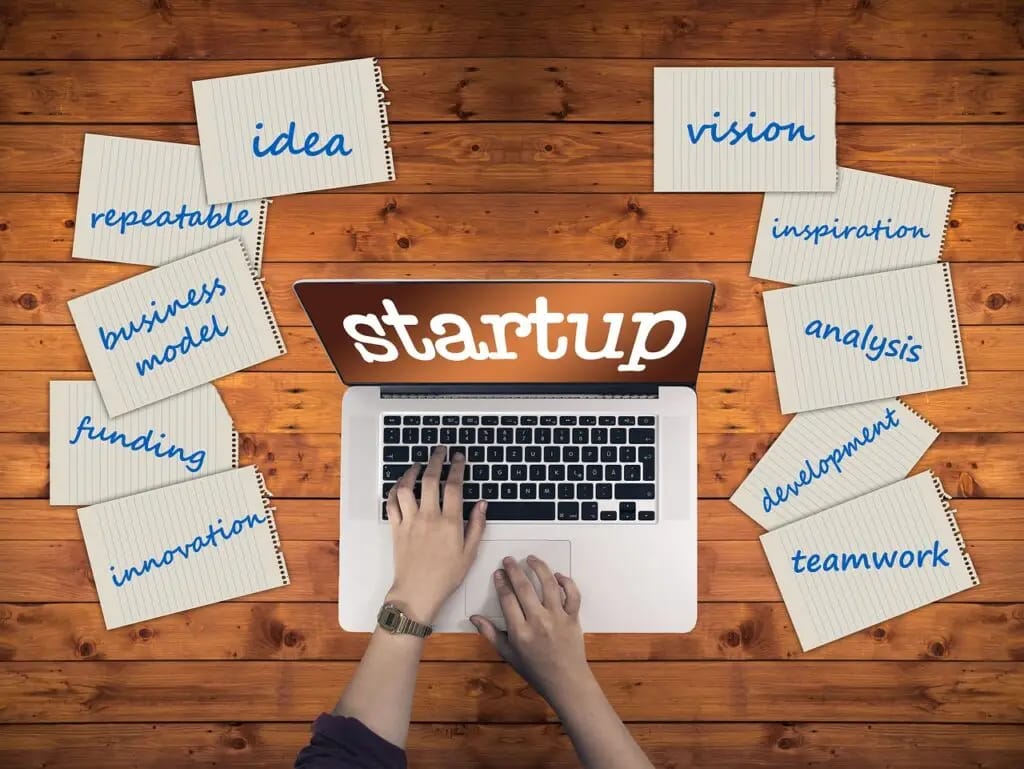
The Startup CTO’s Blueprint: A 10-Step Guide to Building a Scalable Tech Foundation
In the high-stakes game of startup growth, your technology is either a powerful launchpad or a lead weight. Too many promising startups crumble under the weight of technical debt, poor scalability, and security flaws that could have been avoided from day one.
This isn’t just another article on picking a programming language. This is an exclusive, comprehensive blueprint for Founders and technical leaders on how to architect a tech foundation that is built to scale, adapt, and win.
“Weeks of coding can save you hours of planning.” This guide is those hours of planning, distilled.
Step 1: Define Your “Minimum Viable Architecture” (MVA)
Forget the “Minimum Viable Product” for a moment. You need a Minimum Viable Architecture (MVA).
What it is: The simplest, most robust architectural design that can support your MVP and handle the first wave of scale without a complete rewrite.
Key Question: “What is the least complex system we can build that won’t fall over at 1,000 users and can be extended to 100,000?”
Actionable Tip: Isolate your core domain. Use a modular design (even simple service boundaries) from the start instead of a monolithic “ball of mud.”
(Image Suggestion: A simple diagram comparing a messy, tangled “Monolith” vs. a clean, modular “MVA” with separated modules for “User,” “Payment,” “Notifications.”)
Step 2: Make Your Tech Stack Strategic, Not Just Popular
Your tech stack is a long-term commitment. Don’t just choose the trendiest framework.
The Trinity of Decision-Making:
Team & Talent Pool: Can you hire for this? (e.g., Python/JavaScript have massive talent pools).
Community & Ecosystem: Are there well-supported libraries and tools? (e.g., React, Spring, Django).
Performance & Scalability Needs: Does it fit your product? (e.g., Go for high-concurrency, Python for data-heavy apps).
The “Boring Technology” Principle: Often, the mature, “boring” technology is the right choice because it’s stable, well-documented, and easy to hire for.
Step 3: Embed Security from Day Zero
Security is not a feature you add later; it’s a core part of the foundation.
Non-Negotiables: HTTPS everywhere, parameterized queries to prevent SQL injection, hashing passwords with robust algorithms (like bcrypt), and principle of least privilege for data access.
Actionable Tip: Conduct threat modeling for your top 3 user stories in the first month.
Step 4: Master Your Cloud Infrastructure with IaC
Manual server setup is a recipe for inconsistency and disaster.
Embrace Infrastructure as Code (IaC): Use tools like Terraform or AWS CDK to define your infrastructure in code files.
Why it’s critical: Your infrastructure becomes version-controlled, repeatable, and self-documenting. Spinning up an identical staging environment takes minutes, not days.
(Image Suggestion: A code snippet of a simple Terraform script creating an AWS S3 bucket, illustrating the concept of IaC.)
Step 5: Implement CI/CD from Your First Commit
Continuous Integration and Continuous Deployment (CI/CD) are not for “later.”
The Setup: Use GitHub Actions, GitLab CI, or CircleCI to run automated tests on every pull request and deploy to a staging environment on merge to main.
The Payoff: Faster iteration, higher code quality, and a deployment process that is a calm, automated ritual—not a frantic, all-hands-on-deck crisis.
Step 6: Design Your Data Architecture for Scale
How you handle data will make or break your scalability.
Database Choice: Start with SQL (e.g., PostgreSQL) for its reliability and ACID compliance. Introduce NoSQL (e.g., MongoDB, Redis) later for specific, high-scale use cases like caching or real-time feeds.
Think About Access Patterns Early: How will you query this data? Design your indexes and relationships accordingly to avoid painful migrations.
Step 7: Prioritize Observability Over Just Monitoring
You can’t fix what you can’t see.
The Three Pillars:
Metrics: (e.g., CPU usage, request rate, error count)
Logs: (Structured, centralized logging)
Traces: (Following a single request through all your services)
Tooling: Start with integrated tools from your cloud provider (AWS CloudWatch, Google Cloud Operations) and graduate to tools like Datadog or New Relic.
Step 8: Build a DevOps Culture, Not Just a Role
DevOps is a culture of shared responsibility between development and operations.
Empower Developers: Give developers ownership of their code in production. Use feature flags for safe deployment and gradual rollouts.
Automate Everything: Automate testing, deployment, and security scanning.
Step 9: Create Living Documentation
Documentation that is outdated the moment it’s written is worthless.
The Solution: Keep documentation close to the code. Use tools like Swagger/OpenAPI for APIs, and keep your README files updated as part of the Definition of Done for a task.
Step 10: Plan for Failure
Things will break. Be ready.
Run GameDays: Intentionally break parts of your system in a staging environment to test your alerts and team response.
Have a Disaster Recovery Plan: How do you restore from a backup? How do you failover to a different region? Document it before you need it.
Conclusion: Build to Evolve
Your scalable tech foundation is not a castle to be built and finished. It is a living city that must evolve. By following this blueprint, you are not just writing code; you are building a resilient, adaptable, and powerful asset that will carry your startup from its first user to its millionth.
Start Your Business With Vendasta Enter Here
Your foundation is your future. Build it wisely.


Pingback: The 2026 Startup Blueprint: How to Launch a Future-Proof Business from Scratch - develop statrups